


First Steps to Breaking the Vape Habit (Real Guide)
Nobody decides one morning that they want vaping running their day. It creeps up. It starts occasional - a few times here and there - and before you really register it, it’s the first thing in the morning, the thing you reach for in the car, part of every coffee break, automatic the moment stress or boredom hits.
That’s usually when it clicks: this isn’t just nicotine anymore. It’s routine, habit, autopilot. And breaking that is genuinely harder than most people expect, because you’re not undoing a single choice - you’re undoing a pattern your brain has repeated hundreds of times. If you want to move past it without relying purely on willpower, this guide is a practical place to start.
If it helps to know you’re not alone: nearly half of Australians aged 18 to 24 (49%) have tried vaping according to the Australian Institute of Health and Welfare, and about 8.2% of everyone 14 and over currently vapes. In 2024 that national figure fell for the first time on record - so a lot of people are taking their first steps right now, same as you.
Key takeaways
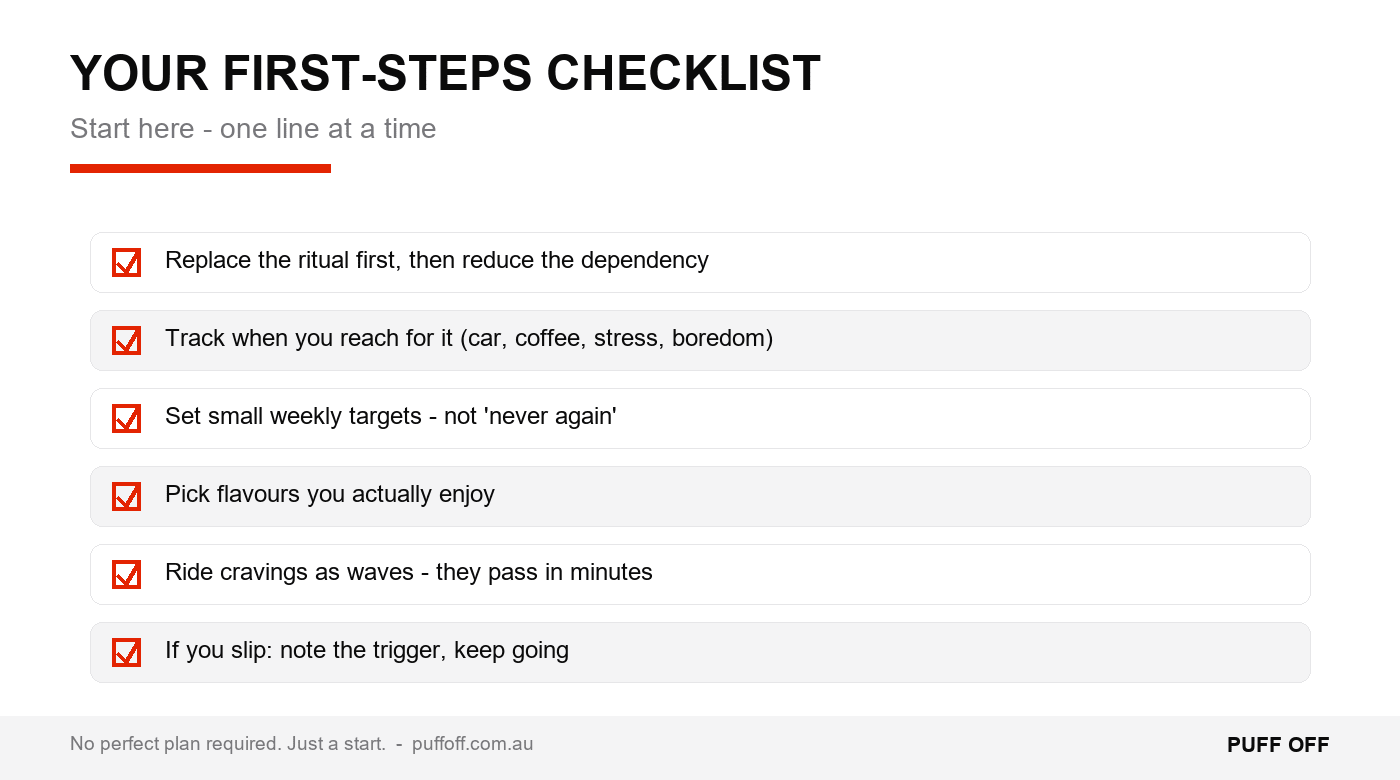
- Replace the ritual first, then gradually reduce the dependency
- Track when you reach for it - awareness alone starts cutting usage
- Cravings are waves: they spike, crest and fade within minutes
- A slip is data about a trigger, not a verdict on you
Why the habit feels so hard to break
Most people think vaping is only about nicotine. For a lot of people, though, it’s tied to far more:
- routine and structure in the day
- stress relief and quick resets
- the hand-to-mouth habit
- a sense of familiar comfort
- daily rituals your brain has come to expect
That’s why suddenly removing it can feel overwhelming - you’re pulling out something that quietly props up a dozen ordinary moments. Understanding that isn’t discouraging; it’s the thing that lets you stop blaming yourself and start working on the parts that actually move. None of this means you’re weak. It means the habit has simply been repeated enough to go automatic, which is exactly what brains do with repetition.
Step 1 - Stop relying on willpower alone
A lot of people try to jump from constant vaping to nothing overnight. Sometimes it works. More often it doesn’t last, because willpower is strongest when you’re calm and weakest exactly when your triggers spike - which is backwards from what you need.
A more realistic order of operations is: replace the ritual first, then gradually reduce the dependency. That’s why so many people look for a nicotine-free option that keeps the familiar parts:
- the inhale and exhale
- the hand movement
- the pause and reset
- the flavour experience
…without continuing the nicotine cycle. You’re not trying to win on grit. You’re giving the routine a less harmful path to follow while you do the slower work of changing the pattern. (We’ve ranked the alternatives people actually stick with if you want the full rundown.)
Step 2 - Track your triggers (this changes everything)
It sounds almost too simple, but paying attention to when you reach for a vape is one of the biggest mindset shifts in the whole process. For a few days, just notice. Most people quickly discover their vaping isn’t really driven by pure craving - it’s linked to specific cues:
- driving
- coffee
- stress
- boredom
- work breaks
- social situations
Once you can see the pattern, the habit becomes something you can interrupt instead of a vague force you’re at the mercy of. For a lot of people, that awareness alone starts trimming usage before they’ve consciously tried to cut down - because you can’t run a routine on autopilot once you’re watching it happen.
Step 3 - Reduce with a plan, not a vibe
“I’ll just vape less” rarely works, because it gives your brain nothing concrete to follow. Small, specific targets do far better:
- Week 1 - reduce overall usage slightly and keep noticing triggers
- Week 2 - delay the first vape of the day
- Week 3 - replace stress-triggered sessions with a different reset
- Week 4 - swap more routines for a nicotine-free alternative
Treat it as a flexible direction rather than a rigid contract. If a week doesn’t go to plan, you adjust and carry on - you don’t scrap the whole thing. Small consistent steps are almost always more sustainable than extreme restrictions that collapse the first time life gets busy. The fuller version of this structure is in our realistic step-by-step plan.
Step 4 - Don’t ignore flavour and experience
This is the step people skip and then wonder why their replacement didn’t stick. If an alternative feels bland, boring, or like a punishment, most people drift straight back to old habits within days. Your brain is comparing the new option to a deeply grooved, genuinely satisfying routine - so the new one has to feel at least a bit enjoyable to compete.
Find flavours you actually like. Rotate them so it doesn’t get monotonous. Make the experience feel intentional rather than restrictive. Changing habits isn’t only about discipline - environment and experience do a lot of the quiet work, and a replacement you look forward to is one you’ll keep reaching for.
Step 5 - Handle cravings differently
Cravings feel permanent in the moment, but they almost never are. They tend to come in waves - they spike, crest, and then fade, usually faster than you expect. The trick is to not treat the first surge as a command you have to obey immediately. Instead, ride the wave:
- wait a minute or two before doing anything
- take a few slow breaths
- drink a glass of water
- distract your hands briefly
- reach for a nicotine-free alternative instead
Most urges pass on their own if you give them a little room. Every time you let one crest and fall without acting on it, you teach your brain that the wave doesn’t actually require the routine - and the loop weakens a little. And if you’re bracing for the early stretch, here’s what the first few weeks actually feel like - usually less dramatic than people fear.
Step 6 - If you slip, keep going
You will have an off day. The single most damaging thing isn’t the slip itself - it’s the thought that follows it: “I already failed, so what’s the point?” That one sentence has ended more attempts than any craving.
A slip is one data point, not a verdict. Notice what set it off - tired, stressed, caught out socially - file it as useful information, and pick the routine back up at the very next opportunity rather than waiting for a fresh Monday. Habits rarely change in a clean straight line. Progress that bends and bumps but keeps trending the right way beats a “perfect” run that snaps the first time it’s tested.
Step 7 - Make the process feel winnable
Motivation follows momentum, not the other way around. Small, slightly playful challenges keep you moving and stack up small wins:
- “No vaping before lunch.”
- “A little lower than yesterday.”
- “Replace every second session.”
Track your progress somewhere you’ll see it, and actually acknowledge the wins - they’re evidence, and evidence is what convinces your brain this is working. The goal was never punishment. It’s gradually changing the routine until it stops running the show.
Just start somewhere
You don’t need the perfect plan. You don’t need everything figured out before you begin. You just need to start paying attention to the habit and making small, consistent changes - one trigger, one routine, one wave at a time.
That’s where momentum starts, and momentum, not willpower, is what carries people the rest of the way.
FAQ
What are the first steps to quit vaping?
Start by noticing when and why you reach for it, without trying to quit yet. Then replace the ritual before removing it, set small weekly targets instead of vague goals, and prepare a response for cravings and stress in advance. The early focus is awareness and replacement, not raw willpower.
Should I replace the ritual or just stop completely?
For most people, replacing the ritual first works better than going cold, because it fills the gap the habit leaves behind. A nicotine-free option that keeps the hand-to-mouth motion, the inhale, and the flavour can hold the routine while you gradually reduce the dependency, rather than leaving an empty space the old habit rushes back into.
How do I deal with cravings as a beginner?
Treat them as waves that peak and pass. Don’t act on the first surge - wait a minute or two, breathe slowly, drink water, keep your hands busy, or use a nicotine-free alternative. Letting urges crest without acting on them teaches your brain the routine isn’t required, which weakens the habit over time.
Why does flavour matter when quitting vaping?
Because a bland or restrictive replacement feels like punishment, and people abandon it fast. Your brain is comparing the alternative to a satisfying, well-worn routine, so the replacement needs to feel at least somewhat enjoyable to compete. Flavours you like - and rotating them - make a replacement something you’ll keep using.
What if I slip up and vape again?
A single slip doesn’t undo your progress. Notice what triggered it, treat it as information about which trigger still needs work, and resume the routine at the next opportunity instead of writing off the whole effort. Habit change is a bumpy downward trend, not a straight line, so occasional slips are a normal part of the process.
Ready to start? Try the Puff Off Starter Kit
When you’re ready to replace the ritual first, this is where to begin.
The Puff Off Starter Kit is built to keep the routine you’re working to change - nicotine-free, flavour-focused, and easy to keep in your pocket for the moments that test you.
Get the Starter Kit - $12930-day money-back guarantee - if it's not for you, you're covered.