


Vaping Withdrawal Symptoms: What to Expect and How Long They Last
The first thing most people want to know when they put the vape down is simple: how bad is this going to get, and how long until it stops. Fair question. When you know what is coming, it stops feeling like something is wrong with you and starts feeling like a phase you can wait out.
So here is the honest version. Nicotine withdrawal is real, it is uncomfortable for a bit, and it passes faster than you probably fear. Most of the sharp stuff is front-loaded into the first week. The rest fades from there.
One thing before we start: this is general information, not medical advice. If you vape heavily, have a health condition, or feel genuinely unwell, talk to your GP or pharmacist. Quitline (13 7848) is free and worth a call.
Key takeaways
- The hardest physical symptoms usually peak in the first 3 days, then ease
- Most people feel noticeably better by the end of week two
- Cravings are the longest tail - shorter and further apart over time
- The habit side (the hand reaching) outlasts the chemistry, and it is not a symptom you can wait out
What nicotine withdrawal actually feels like
Everyone is a bit different, but the same handful of symptoms come up again and again. You will probably get some of these, not all:
- Irritability and a short fuse. Small things annoy you more than they should.
- Anxiety or restlessness. A wired, cannot-sit-still feeling.
- Headaches. Usually early, usually dull rather than sharp.
- Trouble sleeping. Getting to sleep, or vivid dreams once you do.
- Brain fog and poor focus. Reading the same sentence three times.
- Low mood or flatness. Things feel a bit grey for a few days.
- Cravings. Sudden, strong urges that arrive and then leave.
- Increased appetite. Your hands and mouth go looking for a job, and snacks are right there.
None of it is dangerous for most healthy adults. It is your brain recalibrating after getting used to regular nicotine. The discomfort is the sign it is working, not the sign it is going wrong.
Roughly how long each symptom lasts
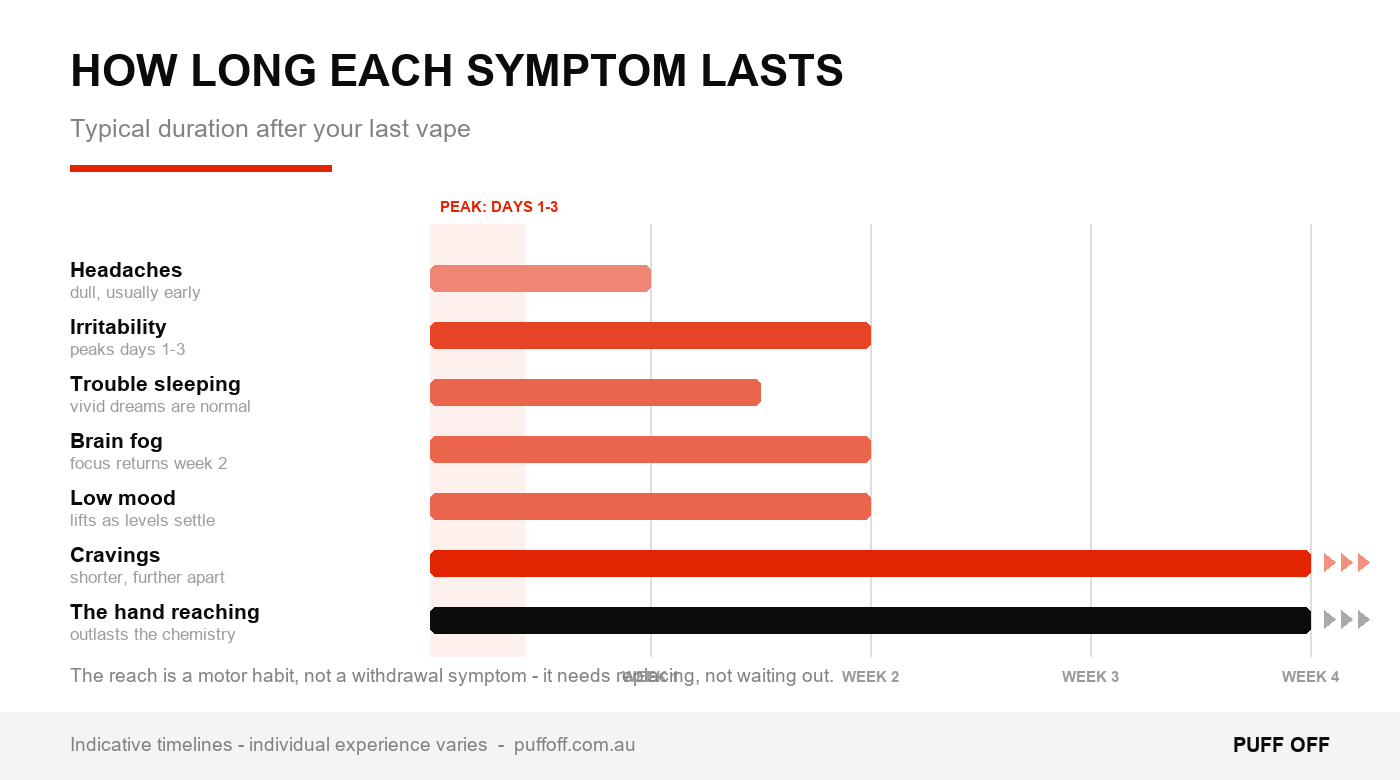
Timelines vary, but here is the general shape most people report:
- First 24 to 72 hours: the peak. Cravings are frequent, mood is low, headaches and irritability are at their loudest. This is the wall people talk about, and it is the bit worth bracing for.
- Days 4 to 7: the edge comes off. Cravings are still there but less constant. Sleep often starts to settle. You get whole stretches where you forget about it.
- Week 2: most people feel clearly better. Mood lifts, focus returns, the physical stuff is mostly gone.
- Weeks 3 to 4 and beyond: cravings become occasional rather than constant, usually tied to a specific trigger (a coffee, a drink, a stressful moment) rather than a background hum.
If you want the week-by-week emotional version rather than the symptom list, we wrote about what the first few weeks actually feel like separately.
The symptom nobody warns you about
Here is the one that catches people off guard, because it is not really a withdrawal symptom at all: the hand keeps reaching.
The nicotine cravings fade on the timeline above. The physical ritual does not run on the same clock. You will reach for a vape that is not there, in the car, after dinner, on a work break, for weeks after the chemical side has quietened down. That is not nicotine. It is a movement your body has rehearsed thousands of times, stored the same way it stores driving or typing. We unpacked why in the hand-to-mouth habit.
Knowing this in advance helps, because most people mistake the reach for a failure of willpower. It is not. It is just an old motor program looking for its cue.
What actually helps
You cannot skip withdrawal, but you can take the edge off it:
- Ride cravings like waves. They spike, crest and fade, usually inside a few minutes. Wait it out, drink some water, move your body, and it passes on its own.
- Move the vape out of reach. Friction is the cheapest willpower there is.
- Sleep and hydrate. Both make the mood and headache side more bearable.
- Give your hands and mouth something to do. This is the big one for a lot of people, and it is the part gum and patches ignore. Water, a toothpick, a stress object, or a nicotine-free ritual replacement that keeps the inhale and the flavour without the nicotine.
- Use the free support. Quitline and the My QuitBuddy app exist for exactly this and cost nothing.
If you want a full rundown of replacements that people actually stick with, we ranked them here.
The bit that should reassure you
Withdrawal feels permanent while you are in it and temporary the moment you are out the other side. Almost everyone overestimates how long the hard part lasts. Give it a week of feeling a bit rough, keep your hands busy, and you will very likely be surprised at how quickly the worst of it is behind you.
FAQ
How long does nicotine withdrawal from vaping last?
The sharpest symptoms usually peak within the first 3 days and ease over the following week. Most people feel clearly better by the end of week two. Cravings are the longest-lasting part, becoming occasional and trigger-based over the following weeks rather than constant.
What are the worst days when you quit vaping?
For most people, days 1 to 3 are the hardest. Cravings are most frequent, and irritability, low mood and headaches tend to peak in that window. It is the stretch worth bracing for and planning around, because it eases noticeably after it.
Is vaping withdrawal dangerous?
For most healthy adults, nicotine withdrawal is uncomfortable rather than dangerous. If you vape heavily, have health conditions, or feel genuinely unwell when you stop, speak to your GP or pharmacist about a managed approach.
Why do I still crave vaping after the withdrawal is over?
Because two different things are fading on two different clocks. The nicotine cravings settle over a couple of weeks, but the physical hand-to-mouth ritual is a motor habit that takes longer to unwind and shows up as reaching for a vape that is not there. Replacing that ritual, rather than white-knuckling it, tends to work better.
What helps most with vaping withdrawal symptoms?
Riding cravings out as short waves, keeping your hands and mouth busy, sleeping and hydrating, removing easy access to the vape, and using free support like Quitline. A nicotine-free ritual replacement helps the behavioural side that gum and patches leave untouched.
Ready to make the first week easier? Try the Puff Off Starter Kit
The cravings will fade on their own. The reaching is the part worth planning for.
The Puff Off Starter Kit keeps the hand-to-mouth ritual - nicotine-free, flavour-focused, no batteries - so your hands have somewhere to go while the chemistry settles.
Get the Starter Kit - $12930-day money-back guarantee - if it's not for you, you're covered.