


Nicotine Withdrawal Symptoms: The Full List and How Long Each Lasts
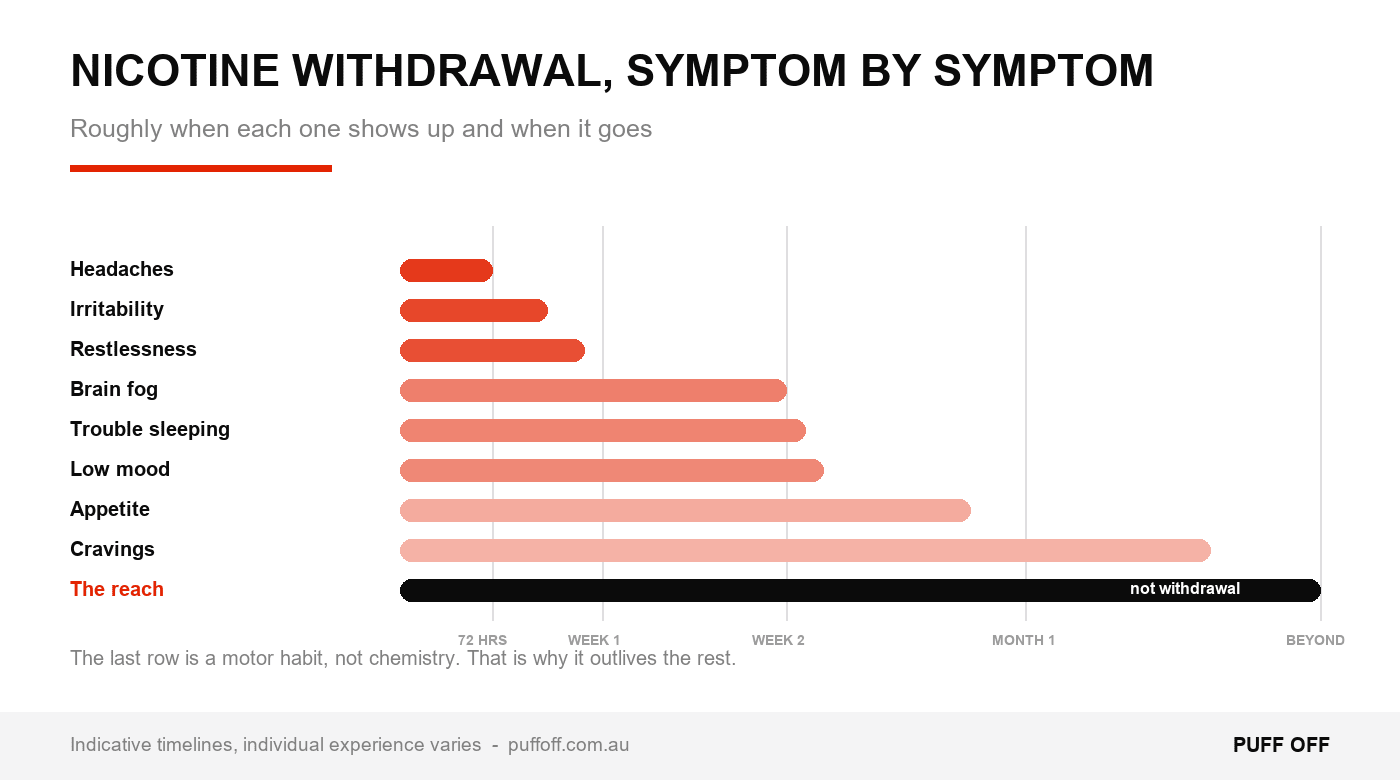
Nicotine withdrawal is not one feeling. It is a cluster of about a dozen separate things, they arrive on different schedules, and they leave on different schedules. Knowing which is which is genuinely useful, because it stops you reading a normal Tuesday as evidence that quitting has broken you.
This is the full list, whether you are coming off cigarettes or vaping. The chemistry is the same either way, though vaping tends to mean more frequent, smaller doses across the day, which can make the first 48 hours feel choppier.
Key takeaways
- Most physical symptoms peak in the first 72 hours and ease clearly by the end of week two
- Cravings are the longest tail, arriving as short waves rather than a constant state
- The hand-to-mouth reach is not withdrawal at all, which is why it outlasts everything else
- Nothing on this list is a sign something has gone wrong. It is the expected shape
The physical symptoms
Headaches. Usually days one to three, sometimes into day four. Nicotine changes blood flow and your body is recalibrating. Water and sleep help more than you would think.
Irritability and short temper. Peaks around days two to four. This is the one your household notices before you do. Worth warning people in advance so they do not take it personally.
Trouble sleeping. Can run one to two weeks. Both directions are normal, some people cannot fall asleep and some sleep heavily and wake up unrefreshed. Vivid dreams are common and harmless.
Brain fog and poor concentration. Roughly the first one to two weeks. Nicotine is a stimulant and your attention system is adjusting to running without it. It lifts.
Restlessness. A physical fidgety feeling, worst in the first week. Movement genuinely helps, which is annoying advice but true.
Increased appetite. Often begins in week one and can persist longer than the rest. Partly chemistry, partly that your mouth is looking for something to do.
Coughing. Can start or get temporarily worse in the first couple of weeks. Uncomfortable but usually a normal part of clearing out.
Constipation. Rarely mentioned, reasonably common, usually settles within a few weeks.
The mental and emotional symptoms
Low mood. Common in the first two weeks. For most people it lifts and keeps lifting. If low mood is heavy, lasts beyond a few weeks, or you have a history of depression, talk to your doctor rather than waiting it out alone.
Anxiety. Often spikes before it settles, which surprises people who expected instant relief. It usually settles within one to two weeks, and many people end up less anxious than they were while still using.
Cravings. Short, sharp waves rather than a steady state. Most last a few minutes. They get less frequent over weeks, then arrive occasionally for months, usually attached to a specific trigger rather than out of nowhere.
The one that is not withdrawal
The reach. Your hand going to your mouth without being asked.
This one is different in kind. It is not a chemical symptom, it is a motor habit, rehearsed tens of thousands of times a year until it runs automatically like typing or driving. That is why it outlasts every other item on this list, and why people are blindsided by it in month two when the chemistry is long finished.
It also explains a specific and very common experience: feeling physically fine, being genuinely past withdrawal, and still finding your hand drifting up at 9pm. That is not relapse and it is not weakness. It is a habit loop that has not been given anything else to do.
Rough timeline
- Hours 4 to 24. First cravings arrive. Restlessness starts.
- Days 1 to 3. The physical peak. Headaches, irritability, worst cravings. This is the hardest stretch, and it is short.
- Days 4 to 7. Physical symptoms start easing. Sleep is often still poor. Real gaps appear where you forget about it.
- Week 2. Most physical symptoms noticeably better. Mood starts lifting. Cravings less frequent.
- Weeks 3 to 4. Chemistry largely done. What remains is habit and trigger-driven.
- Month 2 onward. Occasional cravings tied to specific situations. The reach is the last thing standing.
If you want the week-by-week version in more detail, we covered it in what the first few weeks actually feel like.
What actually helps
For the physical cluster: water, sleep, movement, and patience. A pharmacist can talk you through nicotine replacement options if withdrawal is the main thing standing between you and getting through week one.
For cravings: do not act on the first surge. They are waves. Ten slow breaths, a glass of water, two minutes of moving, and the wave has usually passed.
For the reach: give it somewhere to land. Something for your hands and mouth that keeps the shape of the ritual, so the automatic motion is not just interrupted but redirected.
For all of it: decide in advance. Your judgement at the moment of a craving is worse than your judgement now.
FAQ
What are the symptoms of nicotine withdrawal?
The common ones are cravings, irritability, headaches, trouble sleeping, poor concentration, restlessness, low mood, anxiety, increased appetite and sometimes coughing or constipation. Most are physical and short-lived. Cravings last longest.
How long do nicotine withdrawal symptoms last?
Physical symptoms usually peak in the first 72 hours and ease clearly by the end of week two. Cravings continue as short waves, becoming less frequent over weeks, and can appear occasionally for months tied to specific triggers.
Is nicotine withdrawal from vaping different from cigarettes?
The chemistry is the same. The pattern can differ, because vaping usually means more frequent small doses through the day rather than discrete cigarettes, which can make the first couple of days feel choppier and makes the hand-to-mouth habit more heavily rehearsed.
Why do I still want to vape when withdrawal is over?
Because what remains is not withdrawal. The hand-to-mouth reach is a motor habit rather than a chemical need, so it survives long after nicotine has left. It responds to replacement and repetition rather than to waiting.
When should I see a doctor about withdrawal?
If low mood is heavy or lasts beyond a few weeks, if you have a history of depression or anxiety, or if any symptom worries you. A pharmacist is also a good free first stop for advice on nicotine replacement options.
For the symptom that outlasts the rest
The chemistry sorts itself out in a couple of weeks. The reach takes longer.
Get the Starter Kit - $12930-day money-back guarantee - if it's not for you, you're covered.